
Written in Bone meticulously details archaeological discoveries, presenting a compelling narrative of colonial lives through skeletal analysis, as found in readily available PDF versions․
Overview of the Book
Written in Bone: Buried Lives of Jamestown and Colonial Maryland, accessible in PDF format, presents a groundbreaking exploration of early colonial life․ Author Sally M․ Walker masterfully blends historical context with cutting-edge forensic science․ The book isn’t a traditional historical account; instead, it’s a detective story unfolding through the examination of human remains excavated from a Jamestown burial ground and a colonial Maryland site․
Walker meticulously details how archaeologists and forensic anthropologists reconstruct the lives of individuals who lived centuries ago․ The PDF version allows readers to delve into the specifics of these investigations, revealing details about diet, health, origins, and social status․ It’s a unique approach to history, offering intimate portraits of colonists – a teenage boy, a ship’s captain, an indentured servant, a colonial official, and an enslaved African girl – whose stories are literally “written in bone․” The book’s accessibility through PDF downloads makes this fascinating research widely available․
Sally M․ Walker is a highly acclaimed author of nonfiction books for young adults, renowned for her ability to make complex scientific and historical topics accessible and engaging․ Her work, including Written in Bone: Buried Lives of Jamestown and Colonial Maryland, frequently appears in educational settings and is often available as a convenient PDF download for study purposes․

Walker’s strength lies in her meticulous research and her talent for storytelling․ She doesn’t simply present facts; she weaves them into compelling narratives that bring history to life․ The PDF version of Written in Bone showcases her dedication to detail, allowing readers to closely follow the forensic investigations․ Walker’s previous works demonstrate a consistent commitment to exploring history through unique lenses, and Written in Bone exemplifies this approach, offering a fresh perspective on colonial America readily available in digital format․
The Central Theme: Lives Revealed Through Skeletal Remains
The core of Written in Bone: Buried Lives of Jamestown and Colonial Maryland revolves around the remarkable premise that human skeletal remains can unlock detailed narratives of past lives․ The book, often accessed as a PDF for educational purposes, demonstrates how forensic anthropology bridges the gap between the present and the colonial era․
Walker expertly illustrates how scientists analyze bones to determine age, sex, health, diet, origins, and even causes of death․ This isn’t merely an academic exercise; it’s a powerful method of reconstructing the experiences of individuals long gone․ The PDF version allows for close examination of the evidence presented, highlighting how seemingly inanimate bones “speak” volumes about the hardships and realities faced by early colonists․ Through this, Written in Bone offers a uniquely intimate portrait of colonial life․
Historical Context: Jamestown and Colonial Maryland
Written in Bone, often found as a convenient PDF, explores early colonial settlements, focusing on Jamestown and Maryland’s challenging beginnings and societal structures․
The Early Colonial Period in North America
The dawn of the colonial period in North America was a tumultuous era, marked by exploration, settlement, and profound cultural clashes․ European powers, driven by economic ambitions and religious fervor, established colonies along the Atlantic coast, fundamentally altering the landscape and the lives of Indigenous populations․
Written in Bone, accessible as a PDF resource, provides a unique lens through which to examine this period․ The book’s focus on Jamestown and Colonial Maryland highlights the harsh realities faced by early settlers – disease, starvation, and conflict were commonplace․ The PDF version allows for detailed study of the archaeological evidence presented, revealing insights into the daily lives, social hierarchies, and mortality rates of these nascent communities․
Understanding this historical backdrop is crucial for appreciating the significance of the skeletal remains analyzed in the book, as each bone tells a story of survival, hardship, and adaptation within this challenging new world․ The PDF format facilitates a deeper engagement with these compelling narratives․
Jamestown: The First Permanent English Settlement
Established in 1607, Jamestown represented England’s initial foothold in North America, yet its early years were fraught with peril․ The colony faced devastating famine, disease, and conflict with the Powhatan Confederacy․ Survival hinged on adaptation and, tragically, significant loss of life․
Written in Bone, conveniently available as a PDF, delves into the archaeological record of Jamestown, offering a poignant glimpse into the struggles of these first settlers․ The book’s forensic analysis of skeletal remains reveals details about their diet, health, and causes of death, painting a vivid picture of the hardships endured․
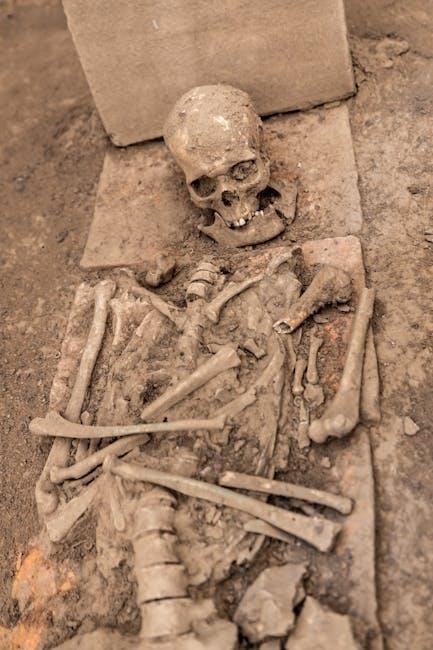
The PDF version allows for close examination of the evidence presented, highlighting how scientific techniques are used to reconstruct the lives of those who perished․ Studying Jamestown through the lens of Written in Bone provides a powerful and intimate understanding of this pivotal moment in American history, accessible through its digital PDF format․
Colonial Maryland: Founding and Development
Founded in 1634 by Cecil Calvert, the second Lord Baltimore, Colonial Maryland was envisioned as a haven for English Catholics, though Protestants also settled there․ Its development differed from Jamestown, focusing on tobacco cultivation and a more diversified economy․ Maryland’s Act of Toleration in 1649, while imperfect, offered early religious freedoms․
Written in Bone, accessible as a PDF, extends its forensic investigation to Maryland, revealing insights into the lives of colonists beyond Jamestown; The PDF details how skeletal analysis illuminates the social stratification and health disparities present in Maryland society․
Through the PDF’s detailed findings, we learn about indentured servants, enslaved Africans, and the colonial elite, gaining a nuanced understanding of Maryland’s complex history․ The book’s digital PDF format allows for a thorough exploration of the archaeological evidence, enriching our comprehension of this crucial colonial period․

Forensic Archaeology and the Book’s Approach
Written in Bone, often found as a downloadable PDF, expertly blends archaeological excavation with forensic anthropology to reconstruct colonial lives from skeletal remains․
The Role of Forensic Anthropology
Forensic anthropology, central to “Written in Bone” – frequently accessed as a PDF resource – employs skeletal analysis to unveil details about past lives․ This scientific discipline, as showcased in the book, isn’t merely about identifying remains; it’s a meticulous process of reconstructing biography from bone․ Experts determine age, sex, stature, and ancestry, offering glimpses into individuals’ origins and physical characteristics․
Crucially, forensic anthropologists analyze skeletal trauma – fractures, lesions, and evidence of disease – to understand causes of death and the hardships endured during colonial times․ The book demonstrates how these analyses, often detailed in the PDF version, move beyond simple identification to reveal patterns of health, diet, and labor․ This approach transforms skeletal remains from anonymous artifacts into compelling personal narratives, breathing life into the historical record and offering profound insights into the realities of early colonial life․
Analyzing Skeletal Remains for Clues
“Written in Bone,” often studied via its accessible PDF format, highlights the intricate process of extracting clues from skeletal remains․ Analysis begins with establishing a biological profile – age, sex, ancestry, and stature – providing a foundational understanding of the individual․ Researchers then meticulously examine bones for evidence of trauma, disease, and nutritional deficiencies, revealing details about their lifestyle and health․
The book demonstrates how patterns in skeletal markers can indicate occupational stress, dietary habits, and even geographic origins․ Detailed in the PDF, these analyses aren’t isolated events; they’re integrated with historical context to build a comprehensive picture of colonial life․ By carefully interpreting these “written” clues within the bone, forensic anthropologists reconstruct narratives of hardship, resilience, and the daily struggles of those who lived centuries ago, offering a uniquely intimate connection to the past․

How “Written in Bone” Utilizes Forensic Science
“Written in Bone,” easily accessible as a PDF, masterfully demonstrates the application of forensic science to historical investigation․ The book doesn’t merely present findings; it showcases the process – how forensic anthropology, isotope analysis, and DNA testing are employed to unravel the mysteries of Jamestown and Colonial Maryland․
Sally Walker expertly explains complex scientific techniques in a way that’s engaging for a broad audience, as evidenced in the PDF’s clear explanations․ The narrative follows the archaeologists’ investigations, revealing how skeletal analysis provides insights into diet, disease, origins, and even social status․ By blending scientific rigor with compelling storytelling, “Written in Bone” transforms historical research into a captivating detective story, proving that the past truly is written in bone and decipherable through modern science․

Key Individuals and Their Stories
“Written in Bone,” available as a PDF, vividly reconstructs lives – a teenage boy, captain, servant, official, and enslaved girl – through skeletal evidence․
The Teenage Boy: Uncovering His Origins and Life
The story of the teenage boy, central to “Written in Bone” (accessible as a PDF), exemplifies the power of forensic anthropology․ Initially, his European origins were determined through skeletal analysis, a crucial first step in reconstructing his past․

Researchers, as detailed in the book, estimated he was approximately fifteen years old at the time of death․ Further investigation, utilizing techniques described within the PDF version, aimed to understand his diet, health, and potential causes of mortality․
While specific details remain elusive, the scientific approach outlined in “Written in Bone” allows for a compelling, albeit incomplete, portrait of a young life lived and lost in the harsh realities of colonial America․ His story serves as a poignant reminder of the individuals behind the historical record․
The Ship’s Captain: Status and Lifestyle
“Written in Bone”, available as a comprehensive PDF resource, reveals insights into the life of a ship’s captain discovered at Jamestown․ Skeletal analysis indicated a man of higher status, evidenced by better nutrition and overall physical condition compared to many colonists․
The PDF details how researchers inferred his lifestyle through bone markers – suggesting a diet rich in protein and access to resources unavailable to indentured servants or enslaved individuals․ Dental health, also examined, provided clues about his diet and potential access to refined sugars․
His remains offered a glimpse into the privileges associated with his position, contrasting sharply with the hardships endured by others․ The book, and its accessible PDF format, highlights how forensic science illuminates social hierarchies within the colonial context, painting a vivid picture of his comparatively comfortable existence․
The Indentured Servant: Hardships and Conditions
The PDF version of “Written in Bone” presents a stark contrast through the skeletal remains of an indentured servant․ Analysis revealed evidence of significant physical stress and poor nutrition, indicative of a life filled with arduous labor and limited resources; Bone lesions and signs of repeated injuries paint a grim picture of their daily struggles․
Researchers, as detailed in the PDF, determined this individual experienced chronic illness and lacked access to adequate healthcare․ Dental analysis showed a diet primarily consisting of maize, lacking the variety and nutritional value enjoyed by those of higher social standing․
The book, and its convenient PDF format, powerfully illustrates the harsh realities faced by indentured servants, offering a poignant reminder of their sacrifices in building the early colonies․ Their bones truly “write” a story of hardship and resilience․
The Colonial Official and Family: Wealth and Social Standing
The PDF of “Written in Bone” contrasts the life of an indentured servant with that of a colonial official and his family, revealed through remarkably well-preserved skeletal remains․ Isotope analysis indicated a diverse diet rich in protein, showcasing access to resources unavailable to the lower classes, as detailed within the PDF document․
Skeletal features suggest a life of relative comfort and leisure, with fewer signs of physical trauma or nutritional deficiencies․ Dental health was significantly better, reflecting a more varied and nutritious diet․ The PDF highlights evidence of refined goods and a higher quality of life․
This family’s remains, accessible through the PDF, demonstrate the stark social stratification of colonial Maryland, illustrating the privileges enjoyed by those in positions of power and wealth, a world apart from the struggles of others․
The Enslaved African Girl: A Story of Suffering and Resilience
The PDF version of “Written in Bone” presents a profoundly moving account of an enslaved African girl, whose skeletal remains reveal a life marked by immense hardship and relentless labor․ Isotope analysis suggests an African origin, tragically uprooted and subjected to brutal conditions, as meticulously documented in the PDF․
Skeletal trauma indicates significant physical stress and potential abuse, reflecting the dehumanizing realities of slavery․ Dental analysis reveals a severely restricted diet, lacking essential nutrients, further emphasizing her suffering, details readily available in the PDF․
Despite the overwhelming evidence of hardship, her remains also hint at resilience and strength, a testament to the enduring spirit of those forcibly brought to colonial Maryland, a story powerfully conveyed within the PDF․

Scientific Techniques Used in the Book
“Written in Bone’s” PDF showcases isotope, trauma, dental, and DNA analyses, revealing origins, injuries, health, and ancestry of colonial individuals․
Isotope Analysis: Determining Geographic Origins
Isotope analysis, a cornerstone technique detailed within the “Written in Bone” PDF, allows scientists to pinpoint the likely geographic origins of the individuals discovered at Jamestown and Colonial Maryland․ This method centers on the varying ratios of stable isotopes – like strontium, oxygen, and carbon – found within tooth enamel and bones; These ratios are directly influenced by the geological composition of the water and food consumed during an individual’s formative years․
By comparing the isotopic signatures of the skeletal remains to established maps of isotopic variation across different regions, researchers can deduce where a person spent their childhood․ This is particularly crucial for distinguishing between those born in England and those who migrated from other areas, or even those of African descent․ The PDF illustrates how this technique helped determine the origins of the “teenage boy,” revealing insights into his life and journey to the New World, offering a powerful tool for reconstructing migration patterns and understanding colonial demographics․
Skeletal Trauma Analysis: Identifying Injuries and Causes of Death
As detailed in the “Written in Bone” PDF, skeletal trauma analysis plays a vital role in understanding the hardships and dangers faced by early colonists․ Examining bones for fractures, lesions, and other signs of injury provides clues about an individual’s life experiences and ultimately, their cause of death․ Researchers meticulously document and interpret these injuries, differentiating between those sustained before, during, or after death․
The PDF showcases how analysis revealed evidence of violence, malnutrition, and disease among the Jamestown settlers․ For example, healed fractures suggest past injuries, while perimortem trauma indicates fatal wounds․ Identifying specific types of trauma – like gunshot wounds or sharp force injuries – offers insights into the conflicts and challenges of colonial life․ This painstaking process, vividly illustrated within the resource, reconstructs narratives of struggle and resilience, bringing the past to life through the physical evidence preserved in bone․
Dental Analysis: Age, Diet, and Health
The “Written in Bone” PDF highlights the surprising wealth of information gleaned from analyzing colonial settlers’ teeth․ Dental analysis provides crucial insights into an individual’s age at death, dietary habits, and overall health․ Examining tooth development and wear patterns allows researchers to estimate age with remarkable accuracy, particularly for juveniles where skeletal age determination is less precise․
Furthermore, the PDF demonstrates how analyzing tooth enamel and calculus (tartar) reveals details about diet․ Isotopic analysis of enamel reflects the geographic location where a person grew up, while calculus traps microscopic food particles, offering direct evidence of consumed foods․ Evidence of cavities, abscesses, and enamel hypoplasia (defects indicating childhood stress) reveals information about health and nutritional deficiencies․ This detailed dental record, as presented in the resource, paints a vivid picture of colonial life and its impact on individual well-being․
DNA Analysis: Exploring Ancestry and Relationships
As detailed within the “Written in Bone” PDF, DNA analysis represents a powerful, though often challenging, tool in reconstructing the lives of those buried at Jamestown and Colonial Maryland․ While ancient DNA preservation is difficult, successful extraction allows scientists to explore ancestral origins and potential familial relationships among the colonists․ The PDF explains how researchers compare extracted DNA to modern populations to infer geographic ancestry, shedding light on where individuals originated before arriving in North America․
Furthermore, DNA can reveal insights into genetic predispositions to certain diseases or traits․ Though limited by sample degradation, the “Written in Bone” PDF illustrates how DNA analysis, when possible, complements other forensic techniques, offering a more complete understanding of the individuals’ identities and connections within the colonial community․ It’s a crucial piece of the puzzle․
Impact and Significance of “Written in Bone”
“Written in Bone’s” PDF version powerfully connects readers to the past, demonstrating how forensic science illuminates personal stories from colonial America’s buried remains․
Bringing History to Life Through Personal Stories
“Written in Bone,” particularly accessible through its PDF format, transcends traditional historical accounts by focusing on individual lives rather than broad societal trends․ The book masterfully reconstructs the experiences of colonists – a teenage boy, a ship’s captain, an indentured servant, a colonial official’s family, and a tragically enslaved African girl – utilizing forensic anthropology․
These aren’t simply names and dates; Walker presents compelling narratives built upon skeletal evidence, offering intimate glimpses into their diets, health, origins, and even causes of death․ The PDF allows for easy access to these detailed accounts, fostering a deeper connection with the past․ By examining bone trauma and utilizing isotope analysis, the book breathes life into these long-forgotten individuals, making history profoundly human and emotionally resonant․ It’s a powerful reminder that history is composed of countless personal stories, each deserving to be remembered․
The Book’s Contribution to Archaeological Understanding
“Written in Bone,” readily available as a PDF, significantly advances archaeological understanding by showcasing the power of forensic anthropology in colonial contexts․ It demonstrates how skeletal remains aren’t merely artifacts, but rich sources of biographical information․ Walker’s work highlights the application of isotope analysis, trauma analysis, and even emerging DNA techniques to reconstruct past lives with unprecedented detail․
The book’s impact lies in popularizing these scientific methods and demonstrating their potential for revealing nuanced insights into colonial society – social hierarchies, health disparities, and migration patterns․ Accessing the PDF version facilitates wider dissemination of these findings, inspiring further research and public engagement with archaeological science․ It’s a compelling case study for the ethical and informative possibilities of studying the past through human remains․
Educational Value and Use in Classrooms
The accessibility of “Written in Bone” as a PDF makes it an invaluable resource for educators․ It bridges the gap between scientific disciplines – archaeology, history, forensic science – offering a tangible example of interdisciplinary research․ Classroom activities, like those focusing on identifying scientific branches featured within the book (as noted in study guides), enhance student engagement․
The book fosters critical thinking skills by prompting students to analyze evidence and draw conclusions about the lives of individuals from the past․ Comprehension questions, readily available alongside the PDF, assess understanding of complex concepts․ Furthermore, it sparks discussions about ethical considerations in archaeological research and the importance of respecting human remains, making it a powerful tool for social studies and science curricula․
No Responses